5 Movies From 1969 That Are Masterpieces, Ranked
genre lists

5 Movies From 1969 That Are Masterpieces, Ranked

By Streamix Editors March 1, 2026 5 items

There’s no particularly relevant reason to look back on 1969 at the time of writing (2025), admittedly. It was a somewhat awkward 56 years ago, but 1969 is nonetheless a generally interesting year for cinema in other ways. The last year of almost any given decade often seems like a weirdly strong one for movies, as evidenced by the likes of 1999 and 2019 especially. Speaking of 2019, Once Upon a Time in Hollywood came out that year, and was itself a cinematic argument for 1969 being a turning point, in some ways, culturally and with regards to the movie-making business. It’s not a wholly accurate depiction of the time (with some fictionalized characters and a fairytale ending, albeit a still brutal one), but it speaks to the times generally, and Hollywood more specifically.

There were indeed radical and groundbreaking movies that came out of the American film industry at the very end of the 1960s, with a few being genuine masterpieces that still hold up. A few of those are highlighted below, alongside a couple of other movies that weren’t made in the U.S., with those showing that it wasn’t just America that had a great year for cinema in 1969. What follows does not encompass all the great movies that came out that year, either, instead being a selection that intends to highlight the very best of the best. If you’ve not watched a ton of older movies from this point in history, some of the ones below might well make for good starting points.

#1
7.6 / 10 IMDb

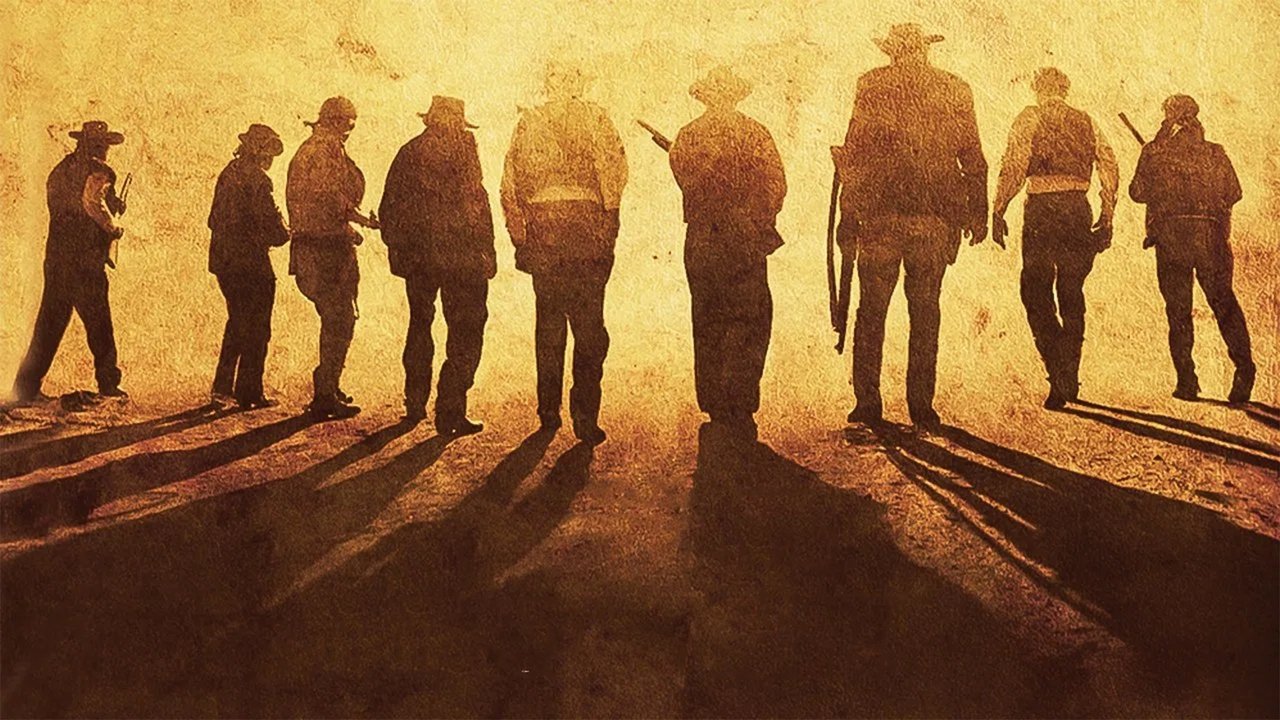
For as great as Butch Cassidy and the Sundance Kid was, the best Western of 1969 would have to be The Wild Bunch, which is more clearly an example of a revisionist Western than Butch Cassidy and the Sundance Kid. There are outlaws at the center of this one, too, but they're all getting on in years, and the era of the Old West is similarly coming to an end. The core gang of outlaws mount a big heist, but things go wrong and they end up being pursued. There’s another attempt to have one last monumentally large score, but there are more complications there, and every choice seems to put the main characters in progressively hotter water, contending with more and more enemies, too.

And so The Wild Bunch uses this to build up a continuing sense of dread, and the level of violence – which was super graphic by the standards of 1969 – also contributes to this feeling of intensity and overall bleakness. It ends famously, too, and on a perfect note for a Western of this kind. The Wild Bunch might not feel quite as shocking when watched today as it would’ve more than 50 years ago, but a surprising amount of it still packs an immense punch. It’s not the only great film Sam Peckinpah directed, but it is understandably considered his best and most iconic movie. It feels like a fitting end to the Western genre as it had existed up until that point, and though it didn’t kill the Western, its willingness to get somber, violent, and intense likely paved the way for later groundbreaking films in the genre, including Soldier Blue, Ulzana’s Raid, and Unforgiven.​​​​​​

#2
N/A / 10 IMDb

One of the most strikingly uncomfortable comedies ever made, The Cremator is… okay, to be honest, just calling it a comedy is inaccurate. It’s very heavy-going, and the sense of humor here is dark enough to still be tremendously uneasy when watched today. The Cremator is also something of a horror movie, and a particularly disturbing one, given it’s about a cremator who already seems a bit disturbed/unusual, but then goes further off the deep end when he begins to become obsessed with the rise of Nazism. It’s set in the 1930s, but not in Germany, instead being a film from Czechoslovakia that nonetheless shows how that ideology reached beyond Germany in the years leading up to World War II.

So, The Cremator is a satire, a dark comedy, a psychological drama, and a queasy horror movie rolled into one. It’s a difficult watch, as a result, but there’s also not quite anything else like it out there. Perhaps there have been comedies with an ever darker sense of humor since, and the structure is honestly comparable to something like Cabaret, which is also about the slow – yet unstoppable – rise of Nazism, but The Cremator plays by its own rules, without a doubt. And so it’s one of those classics that holds up surprisingly well, since you can appreciate it for how disturbing it must've been back in 1969, all the while still feeling intense discomfort when watched over half a century later. Further, the way The Cremator looks and feels really has to be seen to be believed. It wasn’t just ahead of its time, but it also feels out of step with any time, since it still has the impact it does today.

#3
7.6 / 10 IMDb

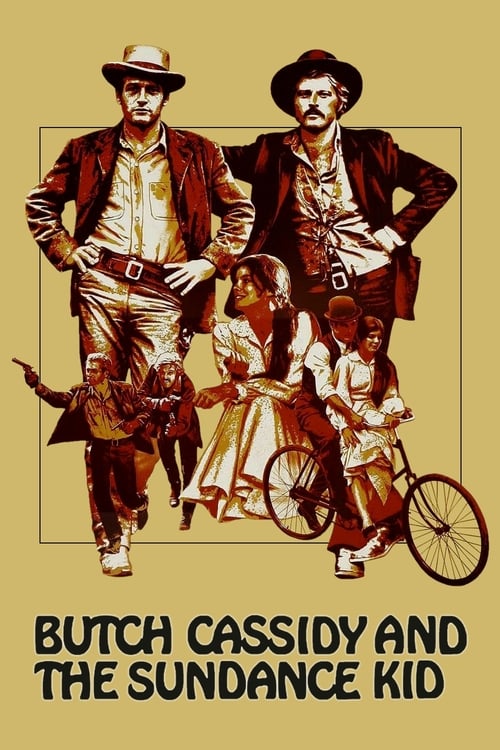
One of the all-time best Westerns to watch if you're not usually a fan of Westerns, Butch Cassidy and the Sundance Kid kind of feels like a buddy comedy/adventure movie that just so happens to be set during Western times. It’s loosely based on the lives of two real people who were outlaws, and then found themselves on the run after pulling off one risky heist too many. Things unfold organically and sort of linearly, too, with both titular characters forced to evade pursuers, continually making themselves larger targets in the process. It’s a movie about two people who find their luck has essentially run out, but it’s also a good deal of fun, not getting as despairing or as cynical as it could.

That being said, there is some unique bleakness to be found in Butch Cassidy and the Sundance Kid, and it goes in that direction enough to be somewhat worth defining as a revisionist Western. But balance is the name of the game here, as you might expect from a film written by William Goldman (just look at all the genres and tonal shifts found in The Princess Bride, which he also wrote). The resulting film is an honestly close-to-perfect one, and Butch Cassidy and the Sundance Kid is also extremely easy to like by Western movie standards. The chemistry between stars Paul Newman and Robert Redford is also worth highlighting, and the two found success again a few years later when they paired up for the Best Picture-winning The Sting.

#4
7.9 / 10 IMDb

Army of Shadows is far from your usual war movie, though World War II is central to the narrative here. Instead of focusing on combat, Army of Shadows is more of a spy thriller, and centers on a spy who’s betrayed by an informant, and subsequently placed in a Nazi prison camp. For a little while, the film is about survival and then escape, with the protagonist forced to juggle continuing to be a member of the French Resistance while also trying to find out the location of the person who betrayed him. And that’s what unfolds slowly but also with maximum tension across the span of close to 2.5 hours, with almost every minute being gripping.

It's got a certain amount of authenticity and grit for a World War II movie, but Army of Shadows also balances that with visual style, which is as strong here as it is in the other great films Jean-Pierre Melville directed (see Le Samouraï and Le Cercle Rouge in particular). Tension and paranoia run high throughout, with this kind of thriller remaining popular for the decade ahead, since the 1970s had a ton of movies where anxiety was heightened. Army of Shadows kind of does that sort of thing, but in a manner that also feels unique. It’s a well-controlled, impactful, and distinctive viewing experience, and one of the more underrated spy-related movies out there.

#5
7.5 / 10 IMDb

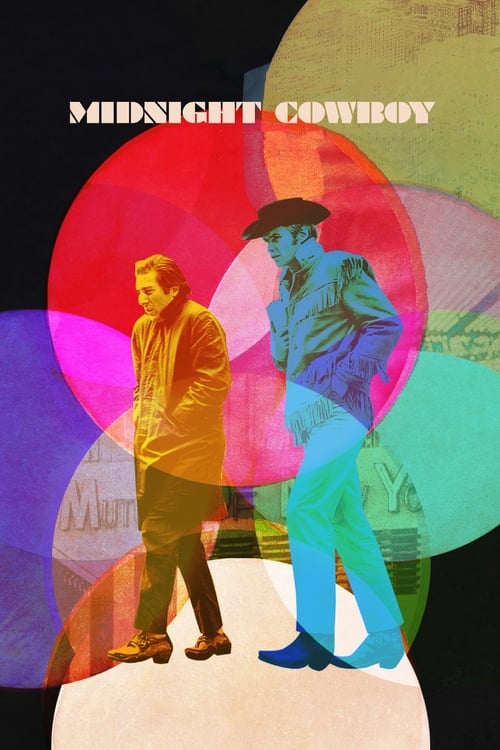
The whole New Hollywood era kicked off a little earlier than 1969, but could be observed in full swing by the decade’s end, and then exploded arguably even more by the time the 1970s came around. And it’s hard to talk about New Hollywood movies without a mention of Midnight Cowboy, which is still the only X-rated movie to win Best Picture at the Oscars. And it'll likely remain so, considering the X-rating was eventually replaced with the NC-17 rating. Anyway, it’s R-rated by today’s standards, but was clearly a shock to the system back in 1969, since it quite openly dealt with a story about a male prostitute, and therefore placed sexuality at the center of things to a greater extent than most other large-scale American movies released before it.

So it’s brave when it comes to content, and Midnight Cowboy is similarly hard-hitting as a movie about the American dream, and the difficulty – or perhaps even impossibility – of attaining it. That’s all to say that Midnight Cowboy is not a fun time, by any means, but it’s an astoundingly powerful drama enhanced by Jon Voight and Dustin Hoffman both delivering career-best performances. It’s a film that’s admirable for its authenticity and honesty, and it can be respected even more in hindsight, since the 1970s are clearly observable nowadays as a radical one for cinema. And Midnight Cowboy, released to great acclaim and awards success in 1969, was an instrumental film in making the 1970s happen the way they did.