10 Best Finales From '80s TV Shows, Ranked
tv shows

10 Best Finales From '80s TV Shows, Ranked

By Streamix Editors March 1, 2026 10 items

So many modern shows live or die based on their finales, but it wasn’t always guaranteed that even a popular series would receive any kind of closure at all. For the longest, networks held a belief that viewers didn’t require a definitive end to a program, and they would move on to the newest shiny object in the prime-time lineup. However, by the 1980s, savvier audiences expected more, and viewers saw a rise in shows receiving a finale that functioned as a goodbye to the characters on screen.

The following episodes are the stand-out finales from some of the '80s most iconic television shows. Whether they shook up the main character’s status quo or provided a surprising revelation about the series as a whole, each is remembered as a send-off that no one would forget.

#1
N/A / 10 IMDb

Few sitcoms commanded an audience as Cheers did. Set in the Boston bar Cheers, the sitcom followed the lives of the staff and regulars who spent their nights swapping stories and increasing their tabs. The comedy’s defining romance between owner Sam Malone (Ted Danson) and scholarly waitress Diane Chambers (Shelley Long) was vital to the first few seasons, so it was fitting that it would also play a part in the finale, “One For the Road.”

Although Diane had left her job at Cheers years prior, familiar feelings return when Sam sees her accept an award on TV. Sam and Diane quickly reconnect and find the spark is still there, leading to an impromptu engagement. However, they both realize they’re acting rashly, and Sam returns to the bar where he spends the evening with his friends. The finale became one of the most-watched finales of all time, pulling in an estimated 80.4 million viewers.

#2
N/A / 10 IMDb

After comedian Bob Newhart made one of the most revered sitcoms of the '70s with The Bob Newhart Show, he struck gold twice with his follow-up, Newhart. The sitcom follows Dick Louson (Newhart) and his wife Joanna (Mary Frann) as they move from New York City to a small town in Vermont to run a historical Inn. As they learn the ins and outs of the hospitality business, they become close to the eccentric residents of the town.

In “The Last Newhart,” an unexpected offer to buy the town at the cost of a million dollars per home to put up a golf course, everyone but Dick and Joanna takes the cash and moves on. It’s a decision Dick soon comes to regret, but after a stray golf ball hits his head, we see the actor wake up in a familiar location. The audience roars when they see the bedroom from The Bob Newhart Show, where it’s revealed that Newhart was just the dream of Dr. Robert Hartley, the character Newhart famously played in The Bob Newhart Show, with his former co-star Suzanne Pleshette making a cameo as Emily to close the show.

​​​​​​​

#3
N/A / 10 IMDb

St. Elsewhere was a medical drama that, in many ways, was ahead of its time. Set in St. Eligius, a run-down hospital where doctors battled budgets as much as they fought diseases, St. Elsewhere featured a diverse cast of future stars, such as Denzel Washington, in episodes that weren’t afraid to take risks. During its run, St. Elsewhere would jump in time and break the fourth wall, but no episode was as memorable or iconic as its finale.

In St. Elsewhere’s final episode, “The Last One,” years of interwoven plotlines and drama are revealed to exist only in the imagination of Tommy Westphall (Chad Allen), a boy with autism. The doctors and medical staff who worked at the hospital were actually people in Tommy’s life, and the hospital of St. Eligius was much smaller and less functional than the series had led viewers to believe. St. Eligius was inside a snowglobe that belonged to Tommy, and everything the audience had seen was of the boy’s creation.

#4
N/A / 10 IMDb

Every fan of the Star Trek franchise has their favorite crew or a captain they deem the best to do it, but few have a bad word to say about Star Trek: The Next Generation. Famously, the original series didn’t get the send-off it deserved, which made it all the more important that the sequel series gave viewers a proper sense of closure. It’s fair to say that the goal was accomplished with the finale “All Good Things…”

Before the Starfleet crew of the starship Enterprise-D made the transition to films, the finale of the television series saw Captain Jean-Luc Picard (Patrick Stewart) split between multiple timelines. Torn between the past, the present, and the future, Picard will be forced to confront a familiar face in order to preserve humanity. “All Good Things…” served as a proper bookend to the series while still allowing Picard to grow as a character in the show’s final moments.

#5
N/A / 10 IMDb

Known for its sharp writing and the chemistry of its superb cast, The Golden Girls has a legacy of being one of the best NBC sitcoms of all time. For seven seasons, viewers never missed a chance to check in on roommates Dorothy (Bea Arthur), her mother Sophia (Estelle Getty), the sweet-natured Rose (Betty White), and the vivacious Blanche (Rue McClanahan). The four women’s friendship was ironclad, which made it all the more heartbreaking when the finale saw one of them leave to start a new life.

In the two-parter “One Flew Out of the Cuckoo’s Nest,” Blanche inadvertently created a love connection when she pushes her visiting Uncle Lucas (Leslie Nielsen) off on Dorothy. Although Dorothy and Lucas initially plan to trick Blanche into thinking they fell in love, the pair develop a real romance that ends in him proposing. Dorothy and Lucas get married, and Dorothy moves to Atlanta with Lucas, but not before a tearful goodbye to the found family she holds so dear.

​​​​​​

#6
N/A / 10 IMDb

Television viewers of the '80s tuned in each week to see sparks fly between Bruce Willis and Cybill Shepherd in the detective dramedy Moonlighting. The series follows Maddie Hayes (Shepherd), a financially strapped ex-model who runs a detective agency with David Addison (Willis), the agency’s carefree original proprietor. Moonlighting mixed comedy with drama and romance while semi-frequently breaking the fourth wall, something the series leaned into heavily for its last episode.

The majority of the finale’s runtime plays as a regular episode, but the final minutes turn into an unexpected but fun meta-cancellation of the series. David walks into his office to encounter an ABC executive who tells him he’s a big fan, but the show will not continue for another season. Maddie enters just as the view of the city is rolled away by a crew member, and she follows David as they run out of the studio backlot where the show was filmed. David and Maddie scramble to prevent their impending demise, but attempts at making their case to a TV producer and getting married can’t stop the final credits from running.

#7

Freefall

(1989)
N/A / 10 IMDb

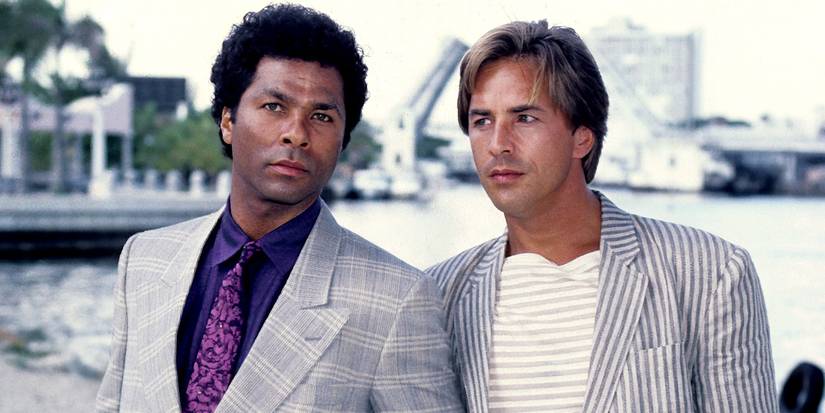
For five seasons, the cop drama Miami Vice brought style and sex appeal into the homes of television viewers. The series starred Don Johnson as Sonny Crockett and Philip Michael Thomas as Ricardo Tubbs, two police detectives working the streets of Miami. Whether it was working undercover stings or taking criminals head-on, each episode of Miami Vice pushed the boundaries of adult content on network television.

The two-hour series finale, “Freefall,” saw Crockett and Tubbs drawn into a government mission involving a corrupt foreign official, General Manuel Borbon (Ian McShane). Double crosses and internal manipulations expose the weariness Crockett and Tubbs already had with the police force, and they make a final stand that results in their time as officers coming to a close. The two men go their separate ways after reminiscing about their adventures together, ending one of the shows that helped define television in the '80s.

#8
N/A / 10 IMDb

While not as flashy as some of the other ratings-grabbing shows on the air in the '80s, Hill Street Blues remains one of the most influential shows ever made. The series followed the day-to-day lives of the police officers who reported to the Hill Street police station. Unlike a typical police procedural viewers were familiar with, the officers on Hill Street Blues had moral flexibility that represented a more realistic depiction of human behavior in a genre that had previously dealt in black-and-white representations of unlawful and lawful.

Unlike some other finales that felt pressured to end with some catastrophic change, the final episode of Hill Street Blues, “It Ain’t Over Till It’s Over,” stayed the course by making it ultimately another day on Hill Street. A fire had badly damaged the precinct, but the structure remained, and so too would the squad that clocked in there. The one exception would be loose-cannon Norman Buntz (Dennis Franz), who would exit after punching the police chief, but he had a spinoff in the form of Beverly Hill Buntz waiting for him after the credits rolled.

​​​​

#9
N/A / 10 IMDb

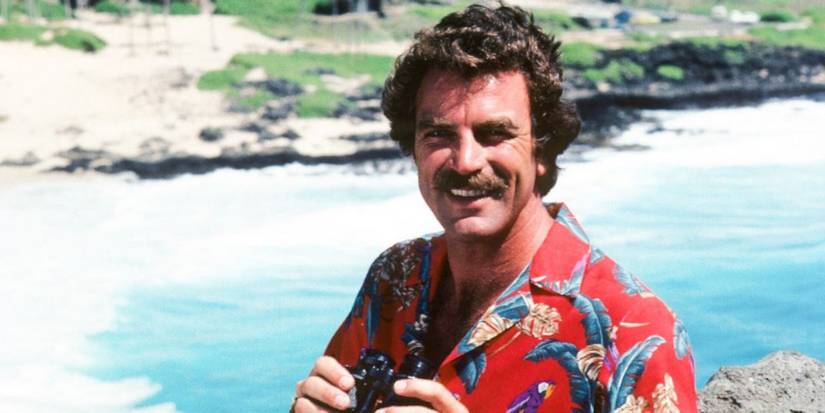
Magnum, P.I. was one of the most universally loved dramas of the 1980s, and its star, Tom Selleck, was one of TV’s biggest stars. The series that followed private investigator Thomas Magnum IV (Selleck) as he solved crimes in Hawaii was appointment television for viewers who loved the show's mixture of action, drama, and comedy.

After Magnum received a stay of execution from a near-death ending in the season seven finale, a shorter season eight wrapped up his story in a more upbeat fashion. In a shocking revelation, Magnum finds out his daughter Lily (Kristen Carreira) is alive, leading the private investigator to reconsider his future. Magnum ultimately reenlists in the Navy, and viewers are treated to Magnum and his daughter walking on the beach together, reunited and content. For those who loved Magnum, P.I., this was a much more acceptable ending than seeing their hero die and walk into the clouds.

#10
N/A / 10 IMDb

Family sitcoms were a staple of '80s programming, but in the crowded field of comedies, Family Ties stood out thanks to the star-making performance from Michael J. Fox as Alex P. Keaton. The series featured Elyse Keaton (Meredith Baxter) and her husband, Steven (Michael Gross), as two ex-hippies who settled down to raise a family in the suburbs of Columbus, Ohio. Much of the humor came from the ideological differences between the parents and their oldest son, Alex (Fox), who was a proud young Republican.

The final two-part episode, “Alex Doesn’t Live Here Anymore,” explored the heightened emotions for the family as Alex prepares to move to New York City for a lucrative job. While Alex is excited about moving on to bigger and better things, a rift is caused between him and Elyse when the mother is hurt by seeing her son leave without hesitation. Before he moves, Alex and Elyse clear the air with an emotionally powerful scene, and Alex says farewell to his family in the kitchen the next morning.