25 Greatest Female Performances of All Time, Ranked
genre lists

25 Greatest Female Performances of All Time, Ranked

By Streamix Editors March 1, 2026 25 items

We tend to praise great actors and applaud method acting, intense transformations, and dedicated performances. Look at any compilation of so-called "great acting," and you'll probably see the usual faces, all doing various degrees of yelling. However, less is said of a great female performance. For a woman, a performance can be as deep as delving within herself and finding a moment when she was forced to change, adapt, or stay the same when it wasn't in her nature.

Many of the most memorable female performances in cinema are somehow related to identity, staying true in the midst of forced or unpredicted change, releasing inhibitions, taking up space, and becoming fully what they're meant to be. Here are the greatest female performances of all time, the most remembered, the most talked about, and the most revered. Attempting to rank them is no easy task, which only speaks to the embarrassment of riches available throughout cinematic history.

#1
N/A / 10 IMDb

A Woman Under the Influence is the most chosen movie among the visitors to the Criterion Closet, and everyone mentions one thing: Gena Rowlands' performance. She embodies the role of Mabel Longhetti with incredible rawness and honesty, playing one of cinema's most challenging roles as a character struggling with modern gripes of womanhood. Rowlands' husband, John Cassavetes, wrote and directed A Woman Under the Influence, and the movie is, today, widely considered one of the greatest of all time.

A Woman Under the Influence follows Mabel Longhetti, who starts displaying increasingly unusual behavior compared to daily life. She's the wife of Nick (Peter Falk), and they have three young kids. With Mabel's life going in different ways, she loses her usual calm demeanor, unraveling into the reality and honesty of her suppressed emotions; Nick is equally unsure how to react. The story shows us how a matriarch maintains order in a home, and just how rarely a housewife and a mother has an excuse to retreat, feel tired, or be selfish for a moment, resulting in a loss of identity and a detachment from true emotions. Times have slightly changed, but not too much, and A Woman Under the Influence stands the test of time and continues to resonate across generations.

#2
N/A / 10 IMDb

Ingrid Bergman is one of the greatest actresses of all time, and a force of nature that inspired many performers like her. She won the Triple Crown of Acting and is one of the few actresses to win multiple Oscars for her performances; Gaslight was her first Oscar win, and it's easy to see why. Bergman's appeal is ethereal, and in Gaslight, she's the quintessential woman on edge, succumbing to the pressures of living in Victorian London, yet falling in love, unsuspectingly, with the wrong person.

Gaslight follows Paula Alquist (Bergman), a niece of a famous opera singer, who is murdered in her home in London. Paula goes to Italy to succeed her and meets the charming and seductive Gregory Anton (Charles Boyer), whom she marries fairly quickly. After returning to London with Gregory, Paula starts experiencing things that feel beyond her control, making her paranoid and on edge. The name Gaslight comes from the gas lanterns flickering in Paula's home as a representation of the culmination of Paula's psychological struggle.

#3
N/A / 10 IMDb

Many modern actresses use Renée Jeanne Falconetti’s performance in The Passion of Joan of Arc as a foundation. The actress, often known as Maria Falconetti, delivers a performance that conveys a palette of emotion throughout a film where no words are ever said. The movie itself is one of the most astonishing achievements in cinema in general. Carl Theodor Dreyer filmed The Passion of Joan of Arc almost entirely in extreme close-ups, so Falconetti's face became the film's landscape; throughout, she conveys doubt, terror, faith, and defiance.

The Passion of Joan of Arc follows the period of Joan of Arc's life when she was captured by the English and sentenced to death by burning as a heretic. Joan of Arc was notably a military leader and a posthumously declared patron saint in France, and she led an army during the Hundred Years' War, claiming she was visited by saints and sent on a holy mission. Nearly a century later, Falconetti's performance still feels like one of the purest expressions of human emotion ever captured on film.

#4
N/A / 10 IMDb

Meryl Streep is the quintessential performer of our time, someone who understands how to delve into the depths of womanhood and humanity. A lot of people call Streep the best performer in modern cinema, and with 21 Oscar nominations in total (17 for Best Actress), she's also one of the most formally recognized professionals in the industry. It feels unreal to watch her transform in front of our eyes, and while it's tough to choose one performance, Streep's work in the difficult drama Sophie's Choice is probably her most poignant.

Sophie's Choice follows a young writer, Stingo (Peter MacNicol), who moves to Brooklyn and meets his new neighbors: a Polish immigrant, Sophie, and her volatile partner, Nathan (Kevin Kline). Stingo and Sophie grow closer as Nathan becomes more paranoid, and she shares her dark backstory. The "choice" is one of the most devastating scenes on film, and though Streep's portrayal of Sophie is often reduced to that one moment, the greatness of her performance is all-encompassing. She gives an innocent warmth to Sophie and makes her charming and sweet, but ultimately burdened by the past she left behind. It's a masterclass in acting without giving too much.

#5
N/A / 10 IMDb

Isabelle Huppert’s work in The Piano Teacher can only be described as a masterclass of repression gone awry. Michael Haneke's psychosexual drama allows Huppert to give one of the most powerful, punishing, and disturbing performances on film. It's disturbing only because of how deep-seated Erika's frustrations are, which also makes it profoundly realistic and even relatable at some points. Haneke didn't want to direct the movie without Huppert in the lead role, and it's lucky she agreed, as it became the most powerful testament to her skills.

The Piano Teacher follows Erika Kohut, a piano teacher who lives with her mother and becomes entangled in an affair with Walter (Benoît Magimel), a young student who becomes the object of her repressed sexual desire. She's outwardly aloof and easygoing, but beneath that, she expresses a need to both be controlled and to control, enjoying physical and emotional pleasure mixed with pain and punishment—all of it to ultimately be less lonely. Huppert succeeds in giving Erika these oppositions; she herself is an effortlessly cool woman, and an actress capable of encompassing opposing emotions in a single scene.

#6
N/A / 10 IMDb

Sunset Boulevard is widely recognized as an iconic film. It's influential for Billy Wilder's directing and a story that dissects Hollywood, its actors, and those willing to participate in the darkness of the industry. The film openly talks about the illusions and troubles of fame through Gloria Swanson’s Norma Desmond. Swanson's portrayal of Norma is raised to new heights as the film moves forward, and she shows us that the actress isn't just someone who finds herself above others, but someone who's survived only through external validation.

Sunset Boulevard follows a struggling screenwriter, Joe Gillis (William Holden), who finds himself at the doorstep of a famous silent film star, Norma Desmond (Swanson). Desmond tried to move into talkies but couldn't be as successful, and meeting Joe leads her to believe he has a new script for her. Her butler, Max (Erich von Stroheim), constantly fuels her delusions about still being loved by audiences, and lines blur for her as Joe gets dragged in deeper. Swanson thrills as Norma Desmond, so much that we can't always predict her next move, but we love it. She pulls us in and gives one of the rare performances that lingers long after the movie ends, wondering what drove her to delusion.

#7
N/A / 10 IMDb

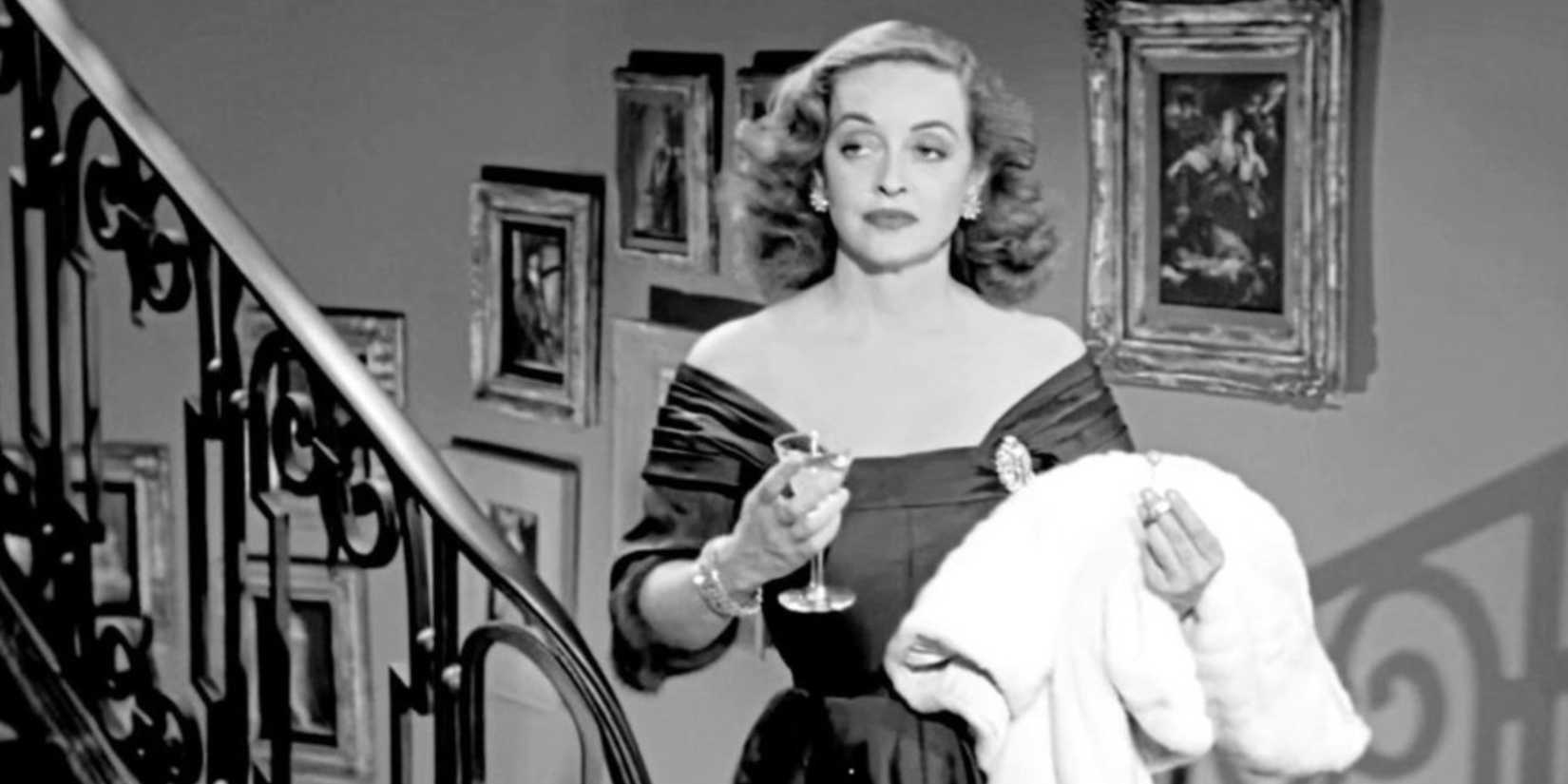
Identity, fame, ambition, and jealousy mark All About Eve, Bette Davis' most notable film. Interestingly, Davis received the call to portray Margo Channing out of the blue, with little preparation involved; she said, after reading the screenplay, that she was so happy and that "any inconvenience was worth it." In a world where signs of aging are considered a death sentence to a career, Davis embraces the trope of an aging actress with her head in the clouds and high self-esteem. Many have praised this exact thing about Davis' performance, the fact that she was willing to immerse herself and become Margo so effortlessly.

All About Eve is based on the recounting of Austrian actress Elisabeth Bergner, who told Cosmopolitan journalist Mary Orr a story about a young girl she took in and who subsequently sought to control her life. The same happens in the movie when the veteran actress Margo Channing takes in Eve Harrington (Anne Baxter). Margo appears benevolent and sympathetic, though she's often arrogant and hostile, hiding a soft inner world filled with insecurities. Many see Davis' performance as "lived in," and it's widely considered to be her best work.

#8
N/A / 10 IMDb

While Persona is often associated with Ullmann’s silent presence, Bibi Andersson carries the film's emotional weight. Persona is Bergman's predecessor to Lynch's Mulholland Drive; it's a movie about identity, a fragile and often elusive part of ourselves that can be shaped by others quite easily. Andersson and Ullmann work well together, but Andersson shines as Alma while delivering one of the most emotionally bare performances in cinema.

Persona follows Alma, a nurse who takes care of an aging actress, Elisabet (Ullmann), who has suddenly stopped speaking as her mental health deteriorates. The head doctor sends both women to an island, where the two are isolated and alone — better said, Alma is alone. Since Elisabet doesn't speak, Alma is the one carrying all the conversations, which soon makes her feel unsure of herself. Andersson builds up the film as the only one to speak between her and Ullmann, making us see just how much Alma gradually dissolves. Her confidence turns into insecurity, and her self-knowledge becomes fragmented, making Andersson a uniquely convincing performer.

#9
N/A / 10 IMDb

With Mulholland Drive being one of the greatest psychological thrillers ever made, Naomi Watts can brag about delivering one of the all-time greatest female performances in it. For much of the film, she plays her character Betty with an almost exaggerated wholesomeness; she's bright, eager, and endlessly optimistic, but that feels by design. Betty is an aspiring actress, and Watts is a professional at this point, delivering a performance within a performance. She mentioned being ready to give up on acting around this time, so David Lynch's invite to play Betty came at a perfect time. It might also be what prompted Watts to make Betty so dual—a desire to give it her all, with nothing to truly lose anymore.

Mulholland Drive follows an aspiring actress, LA newcomer Betty Elms, who meets an amnesiac woman who names herself Rita (Laura Harring). Throughout the film, Betty and Rita try to trace back the steps of Rita's life in an attempt to retrieve her memories of the past. The contrast between the two halves of Watts' performance is stark and often considered a stroke of genius. It's a role that feels uniquely designed for Watts, and it's still mentioned as one of the greatest performances of all time.

#10
N/A / 10 IMDb

As one of the most iconic performers of all time, Vivien Leigh stands tall. From Gone With the Wind to A Streetcar Named Desire, she was a consummate professional, giving her all for each role, both body and soul. Leigh initially played Blanche DuBois on the West End stage, mastering the role so much that she later claimed it "took over her." Though she was underestimated on set, Leigh delivered a Blanche so fragile and humane, a woman actively holding herself together through illusion.

A Streetcar Named Desire follows Blanche DuBois, a high school teacher, arriving in New Orleans to be with her sister Stella (Kim Hunter) and her husband Stanley (Marlon Brando). Blanche hides a secret while her sister's marriage unravels before her, and Stanley grows distrustful of Blanche, with his alcoholism and anger issues worsening. With Blanche's lies becoming more apparent, Stanley's disdain for her presence helps her become a sympathetic character, though she sometimes clings to fantasy because reality is unbearable. Leigh infuses the role with a refined and delicate stature, and after winning an Oscar for her performance, she was cemented as the greatest Blanche of all time.

#11
No Image
N/A / 10 IMDb

The Color Purple is one of the most emotional movies ever made, and the actress who stole the picture and everyone's hearts was Whoopi Goldberg, earning a Best Actress Oscar nomination for her performance. The Color Purple was the first of Steven Spielberg's films that wasn't molded to be a typical summer blockbuster (which he basically invented), but it's a generally revered adaptation of Alice Walker's novel. Goldberg still wows as Celie, her breakthrough role in film, as she had previously been known only as a comedic talent.

The Color Purple follows Celie, a young woman whose father sends her to live as a wife and housemaid of an older man known as Mister (Danny Glover). Celie and her friends Sofia (Oprah Winfrey) and Shug (Margaret Avery) learn how to deal with the incessant domestic violence they suffer, most notably Celie, who inevitably becomes meek and obedient. The story follows her going from someone shaped by violence to a woman encouraged and loved enough to finally realize she can stand up for herself. Goldberg had an intense job, and went through it marvelously; despite criticism and controversy, The Color Purple is an influential film led by the intrepid and vibrant Goldberg.

#12
N/A / 10 IMDb

We Need to Talk About Kevin is one of those movies that leaves you out of place once it ends. It's hard to fully explain how the impact of some of its moments feels, but things come together well, though not in a way anybody wants to witness. Tilda Swinton is the emotional core of this psychological drama, playing both the core of the problem and the solution.

We Need to Talk About Kevin follows Eva, who somewhat reluctantly decides to settle down and have a family with her partner, Franklin (John C. Reilly). Their first child is Kevin (Ezra Miller), who completely rejects her over the years, being manipulative and sociopathic. The movie spans over 15 years, following Eva's distress over Kevin, turning her from a carefree woman into one riddled with guilt and anger. The line between Eva being innocent and fully responsible for Kevin's behavior is blurred, and Swinton doesn't make it easier to understand. Swinton herself theorized that Eva doesn't understand the true nature of maternal love, which makes the movie's events shakier.

#13
N/A / 10 IMDb

Often lauded as one of the greatest performances ever, Diane Keaton's portrayal of Annie Hall is a beautiful and charming rendition of a character that was actually based on her (her full name was Diane Keaton Hall). The role was written for her, but it was her performance that made us fully believe it. Annie is also recognizable for her fashion, wearing a mix of classic menswear and feminine pieces that round out the character's charm; she defined an outstanding, effortlessly cool rom-com lead that is still struggling to be understood without irony and clichés attached to her. It's really Keaton that was the secret formula for Annie's appeal and beauty, which is why no one will ever be like her.

Annie Hall follows comedian Alvy Singer (Woody Allen), and the recounting of his failed relationship with Annie Hall, a woman he has a hard time getting over about a year after their breakup. As he goes back, we meet Annie and her laidback personality, love of the arts, and enthusiasm for discussions, realizing also that Alvy is a nervous wreck riddled with skepticism. Keaton mentioned many times that playing Annie was her favorite role and that she was glad to have been her. It's rare to see an actor embrace a character with so much love and adoration, but that explains why we also love Annie Hall just as much.

#14
N/A / 10 IMDb

Juliette Binoche is a household name in France, but also a globally renowned actress. In the Three Colors trilogy by Krzysztof Kieślowski, she stars in Blue, and thus far, this is the most memorable role she's ever done, and the most talked-about movie of the trilogy. Binoche is natural and magnetic even in tragic roles like the one she portrays here, showing her character coping with grief by refusing connection, desire, and engagement with the world.

Three Colors: Blue follows Julie, who gets into a car accident with her husband, composer Patrice, and their 5-year-old daughter. She is the only one who survives, and after trying to commit suicide, she continues to live, though barely. She puts up her family home for sale and decides to burn all the musical compositions she's done with Patrice, but life doesn't let her just stay away from the world. Little by little, Julie finds reasons to move on, to get out of the idealized bubble she created about her husband, and mourn her child in a way that honors both of them. With Binoche, we can see these transitions—they're gradual, but beautiful in the end. She gives a quiet and honorable performance; magnetic, as mentioned.

#15
N/A / 10 IMDb

Blue Jasmine is Cate Blanchett's most memorable performance, though she gives it her all in so many other movies. Blanchett's appeal comes from her bravery and curiosity—we see her portraying characters of all kinds, from super-cool swindlers to villainous goddesses, though every single role she steps into breathes with a certain energy only she has. Blue Jasmine gives us Blanchett at her most complex, honoring an arguably terrible, often shallow person with a deeply hurt core and pent-up emotions.

Blue Jasmine follows the wealthy Manhattan socialite Jasmine Francis, whose husband was arrested for defrauding his clients before dying in prison, leaving her in debt. Jasmine travels to be with her sister in San Francisco and tries to go through the world after her family falls apart. Despite being basically penniless and down on her luck, Jasmine maintains a snobby, shallow outlook on the world based on social standing and personal wealth. She feels petty and defensive, but with Blanchett's help, she's also painfully relatable in some ways. Jasmine is quite the tragic character, but mostly because, even when she loses everything, she doesn't see herself clearly enough to change.

#16
N/A / 10 IMDb

One of the most beautiful romantic movies ever made is Wong Kar-wai's In the Mood for Love, starring Maggie Cheung and Tony Leung. The two have an electric chemistry on-screen, and no one could have delivered the same performances with as much restraint and emotion. Wong wanted to evoke 1960s Hong Kong in this feature, and he succeeded mainly through the behavior of the protagonists, placing them in a time when social statuses still led people's lives for them. Their closeness through distance mirrors strict social codes while evoking nostalgia.

In the Mood for Love follows Su Li-zhen (Cheung) and Chow Mo-wan (Leung), two next-door neighbors who realize that their spouses are cheating on them with each other. The two spend time together to break the solitude, but end up falling in love through shared moments that dissipate their loneliness. While Leung is great—masculine, gentlemanly, and protective—it's really Cheung who drives the emotion of the film as an ethereal, graceful woman yearning to be loved intensely once again. When we think of this movie, we think of her appearance and shy, yearning glances that help us understand the restraint and the desire.

#17
N/A / 10 IMDb

Toni Collette's performance in Hereditary was the reason people kept asking for award shows to introduce horror movies into rotation. Her performance was boosted by Ari Aster's thrilling direction and screenplay, which expertly weaves in grief, generational trauma, and anger between the elements of supernatural and folklore horror. Collette allows herself to unleash a restless rage caused by overwhelm and pushing down her true feelings for the sake of her family.

Hereditary follows the Graham family, parents Annie (Collette) and Steve (Gabriel Byrne), and teen kids Peter (Alex Wolff) and Charlie (Milly Shapiro). One day, Annie's distant mother dies, and Annie realizes a lot of strange things start happening after her funeral, including more tragedy befalling their family. As she tries to keep the family together and stay calm herself, humanity jumps out of the supernatural narrative, and she delivers a powerful monologue of a woman on edge. It's one of the most memorable monologues in recent history, and people still quote it and enjoy Hereditary because of Collette.

#18
N/A / 10 IMDb

Isabelle Adjani in Possession delivers one of the most physically and emotionally extreme performances ever seen. Adjani said she had a difficult time getting over the role for years, with heavy consequences on her mental health and psyche. As Anna, Adjani throws herself into hysteria, grief, rage, and madness with a level of commitment that feels dangerous, and knowing the toll it took, it pretty much was. The result is a terrifying performance that will never leave your mind.

Possession follows a married couple living in Berlin—Anna (Adjani), a housewife, and her spy husband, Mark (Sam Elliott). Mark returns from a mission and finds out that Anna wants a divorce and that she's seeing another man. After Mark gets Anna followed by a private eye, he realizes there's more than just another man in Anna's life. Anna deals with things beyond her comprehension, yet she shows a genuine understanding and dedication. Whether possessed or acting on her own, Adjani's portrayal of Anna's mental fragmentation is unsettling but ultimately iconic. It may be a cliché to say, but it seems true that very few actors have ever gone this far, losing control and giving in to the urge.

#19
N/A / 10 IMDb

Jodie Foster in The Silence of the Lambs is the true epitome of innocence corrupted. As an FBI rookie, her character Clarice is obviously not going to have gentle experiences, but the first case she's put on is the one that transforms her by the end. From her first appearance, Foster establishes Clarice as observant, cautious, and self-aware; she leads with curiosity and easily takes charge in every situation. Foster won the Best Actress Oscar for The Silence of the Lambs, and Clarice is her most memorable role.

The Silence of the Lambs follows FBI rookie Clarice Starling, assigned to interview a brilliant psychologist and serial killer, Hannibal Lecter (Anthony Hopkins), in order to find out more about the killer that the FBI is currently chasing. Meeting Hannibal changes Clarice and shows her she's more resilient than she instantly believes, even if their relationship doesn't have strict boundaries by the end. Foster delivers one of the most iconic roles in horror, and her tenacity is what makes the film so good and so easily rewatchable.

#20
No Image
N/A / 10 IMDb

Frances McDormand is one of the few actresses who has won multiple acting Oscars, and with three wins for Best Actress, she is officially one of the greats (and has been for a while). The first time we knew McDormand was great was in Fargo by the Coen Brothers, where she plays the female lead, Marge Gunderson. Though the movie is filled with violence and a ton of morally gray characters, Gunderson stands out as a force of good, uncorrupted and true to herself and her work; after all, she is the police chief. We love Gunderson because she never doubts her instincts or pretends to be someone else.

Fargo is set in Minnesota and North Dakota and follows Jerry Lundegaard (William H. Macy), a car salesman who sets up his wife's kidnapping to get a good ransom award. Jerry meets two small-time criminals who decide to help him, but a lot of things go wrong. Police Chief Marge Gunderson begins investigating after that, making accurate guesses and showing a keen eye and little patience for swindlers. While the movie as a whole is a masterpiece, McDormand's performance makes it memorable and legendary—without her, it wouldn't be the same.

#21
N/A / 10 IMDb

Zhang Yimou and Gong Li made nine films together, and Raise the Red Lantern is their fourth collaboration. Gong is quite an underestimated performer, but Zhang always knew what to get out of her that no other director could. This trust between them allowed Gong to become renowned for her incredible transformation, dedication, and appeal in this film. She was widely praised for her lead role in a movie that can best be described as a psychological drama, portraying a barely adult woman grappling with her newfound home. She's the story's emotional center, mostly because others in the film barely show affection, following a social code her character can't fathom.

Raise the Red Lantern is set in 1920s China and follows 19-year-old Songlian (Gong), who's forced by her stepmother to become the fourth wife of the wealthy Master Chen after her father dies. When Songlian arrives, she soon realizes the household dynamics and finds ways to survive and become Chen's only lover. The youth and feist in Songlian is apparent; she's also sometimes selfish and rude, which are responses to her rigid environment, not her true character traits. Gong Li delivers a beautiful and emotional performance full of contradictions that helped make Raise the Red Lantern a landmark film of the 1990s.

#22
N/A / 10 IMDb

Autumn Sonata is Ingrid Bergman's final movie, and the first and only film she made with her namesake, Ingmar Bergman. And though she was mostly the one awarded with numerous accolades, Liv Ullmann’s performance as Eva is just as, if not even more important and powerful. Playing a woman confronting a mother who emotionally abandoned her, Ullmann delivers frustration and vulnerability to the screen, fed up with the torn relationship and her mother's ignoring of the neglect she put Eva and her sister through. Ullmann gives Eva layers she unmasks over time, showing a lot of unresolved pain.

Autumn Sonata follows Eva (Ullmann), a woman who reunites with her famous pianist mother, Charlotte (Bergman), after not seeing each other for seven years. Eva takes care of her ill younger sister, Helena, believing that their mother's neglect made Helena's health worse. What ensues is a battle of wits between two oppositely stubborn women — Eva seeks acknowledgment of her mother's neglect while Charlotte refuses to say anything. There's a lot to analyze about Eva's behavior and lifestyle in Autumn Sonata, and it's a deeply layered and emotional film that Ullmann carries through Eva's kindness, trauma, and self-sacrifice.

#23
N/A / 10 IMDb

Judy Garland’s Dorothy Gale from The Wizard of Oz is one of the most iconic film characters of all time. She's a fantasy heroine, one who is also deeply emotional, driven by kindness, honesty, and integrity as an uncorrupted young person. Garland's embodiment of Dorothy's innocence is quite moving, and she's the only one who could have pulled off a role like it. Though the production of The Wizard of Oz was complex in many ways, it's still a highly influential film.

The Wizard of Oz follows a young girl from Kansas, Dorothy, who is swept by a tornado with her dog Toto, waking up in a magical world called Oz. There, she meets a Tin Man, a Cowardly Lion, and a Scarecrow, and they embark on a journey together to find the mythical Wizard of Oz, who they learn can help them. The Wizard of Oz has timeless hits, like "Over the Rainbow," which became Garland's signature song, hitting all the right notes and infusing the tune with yearning and curiosity. Her entire performance carries the film: the emotions invested into this moment alone make the entire film memorable so many decades later, cementing Garland as the true and only Dorothy.

#24
N/A / 10 IMDb

Pam Grier deserves recognition for standing still on that airport conveyor belt at the start of Jackie Brown alone; still, the entire film is just as brilliant. Quentin Tarantino directs her as the badass woman she is, and even names the entire movie after her character. Tarantino adapted the screenplay from Elmore Leonard's novel Rum Punch, but decided to make the protagonist Black, being inspired by the blaxploitation films in which Grier often starred. The film itself is sort of dedicated to and revolves around Grier, despite many characters intertwining.

Jackie Brown follows the titular character, flight attendant Jackie Brown, who smuggles money for local gun peddler Ordell Robbie (Samuel L. Jackson). One day, she gets caught by the police, and Ordell bails her out, but when he comes to kill her, she one-ups him and negotiates a deal. The movie follows Jackie as she tries to get out of Ordell's business and grab some money for herself. Grier is magnetic in every scene; she has an iconic look and gives her character maturity, level-headedness, and great instincts. She is the moment, and Jackie Brown is the greatest love letter to Grier and her work.

#25
N/A / 10 IMDb

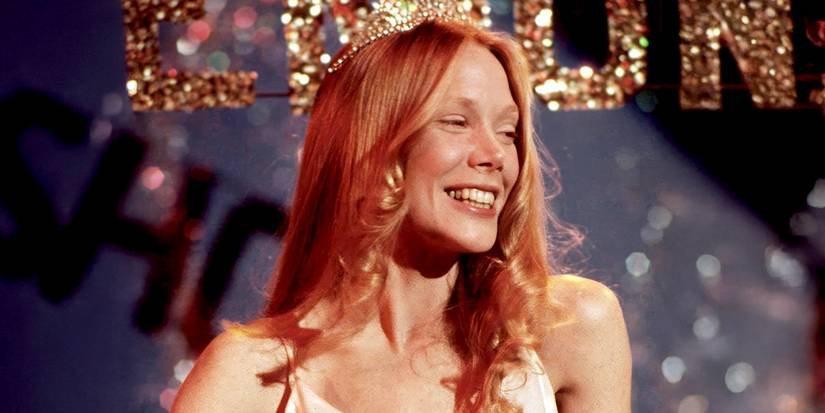
Carrie is one of the best psychological horror/thrillers from the 1970s. It gave us a glimpse into what a great adaptation of a Stephen King novel can look like, and it gave us Sissy Spacek’s most iconic performance as the titular protagonist, Carrie White. Spacek plays Carrie with a vulnerability that makes her transformation feel relatable; she takes enough until it's no longer bearable, shedding her hunched posture, hesitant eye contact, and a lowered voice, and unleashing all the pent-up rage and emotions.

Carrie follows a high school girl, Carrie White, who lives with her strict religious mother and suffers constant bullying at school. Carrie quickly realizes that she has the power of telekinesis — moving things with her mind — and as she develops it, she gains more confidence and curiosity about the world, though still in secret. Even when the big final moment happens, Spacek still portrays Carrie as a frightened, wounded child reacting to cruelty the only way she knows how. Sissy Spacek was one of the first to show us that horror performances deserve widespread recognition, earning an Oscar nomination for her efforts.