The 10 Best Time Jumps in TV Shows, Ranked
misc

The 10 Best Time Jumps in TV Shows, Ranked

By Streamix Editors March 1, 2026 10 items

Content Warning: The following article contains spoilers.The time jump trope has become one of the more volatile storytelling tricks a series can pull. There have been plenty of iconic shows that have employed the narrative device and capitulated as a result. The abrupt leap forward in the timeline can be a jarring misstep, one that interferes with character trajectories and dynamics while shattering the story audiences loved and leaving them confused and frustrated. However, the gimmick can be used to great effect as well.

Ranging from sci-fi adventures to crime thrillers, free-spirited comedies, and even dystopian dramas, each of these 10 shows used time jumps to strengthen their stories, whether by accelerating predictable plot details and skipping uninteresting periods in the narrative, illustrating the brutal nature of the passage of time, or by intelligently alienating the audience to conjure a greater sense of suspense and intrigue. Some crept ahead a few months or maybe a year, while others leaped forward decades, but all of them are great examples of how the storytelling device can be implemented with purpose and impact.


#1
N/A / 10 IMDb

Six Feet Under may be the best hidden gem series of the 2000s. A deft combination of black comedy, dysfunctional family drama, and existential mindfulness, it follows the Fisher family as they manage their father’s funeral home, Fisher & Sons, after his death. Each episode typically opens with someone’s death before delving into the complexity of the Fisher family as they handle the preparation for the service. Magnificently, the series’ greatest episode comes in the form of its finale, which delivers one of the most rewarding conclusions to any series in television history.

The series ends with a beautiful sequence of time jumps, spanning as far forward as 2085, as it showcases how each of the major characters dies. The use of time jumps ensures that “Everyone’s Waiting” brings about a conclusion to Six Feet Under that offers a profound sense of closure, an artful and emotionally vindicating resolution that celebrates the imperfection of family and the randomness of life (and death). Never before or since has the time jump narrative device been used with so much emotional gravitas.

#2
N/A / 10 IMDb

The final episodes of Breaking Bad present one of the greatest streaks any series has enjoyed in television history, a momentous and propulsive push to what is the best finale the crime genre has ever seen. The pivotal time jump in the penultimate episode is hugely influential in this. After the events of “Ozymandias,” in which Hank (Dean Norris) is killed, and Walter White’s (Bryan Cranston) crimes are exposed, “Granite State” sees Walter resigned to fleeing New Mexico and leaving his family behind as he is taken to a secluded cabin in New Hampshire.

The episode then skips ahead approximately five months, showing a ragged Walter with hair and a scruffy beard on the cusp of admitting defeat, only being inspired to persevere out of spite after seeing his former colleagues trivialize his involvement in the launch of their company. It is easy to forget that the bulk of Breaking Bad’s five seasons unfold over the course of just two years. This five-month leap is perfectly executed, not only because of its narrative impact, but because of the sense of time and gravitas it imbues the finale with.

#3
N/A / 10 IMDb

An audacious continuation/reworking of the hit Coen Brothers’ film of the same name, Fargo has become a gem of modern television and a joyously rewatchable hit of small-screen thrills. Any skepticism or doubts audiences had regarding the rebooted premise were quickly put to rest with its addictive and wonderfully eccentric first season, following meek insurance salesman Lester Nygaard (Martin Freeman) as he becomes embroiled in a hitman’s killing spree. Hysterics and tension run as one as Nygaard not only becomes increasingly involved in the crimes but also benefits from them.

The eighth episode springs forward a year, with Lester imbued with a new confidence as he has successfully avoided any legal consequences for his actions and is living life as an award-winning salesman in Las Vegas, occupying an air of sociopathic scumbag arrogance that Freeman plays with an infectious, humorous glee. Also seeing Lorne Malvo (Billy Bob Thornton), Deputy Molly Solverson (Allison Tolman), and Gus Grimly (Colin Hanks) undergo drastic changes in their lives, Fargo’s Season 1 time jump is a work of subversive, succinct brilliance. It recontextualizes the setting of the quirky, quiet town as a vessel of lingering, unresolved evil, while also re-framing the story as less of a pulsating crime thriller and more as a thematic observation on inevitable consequences.

#4
N/A / 10 IMDb

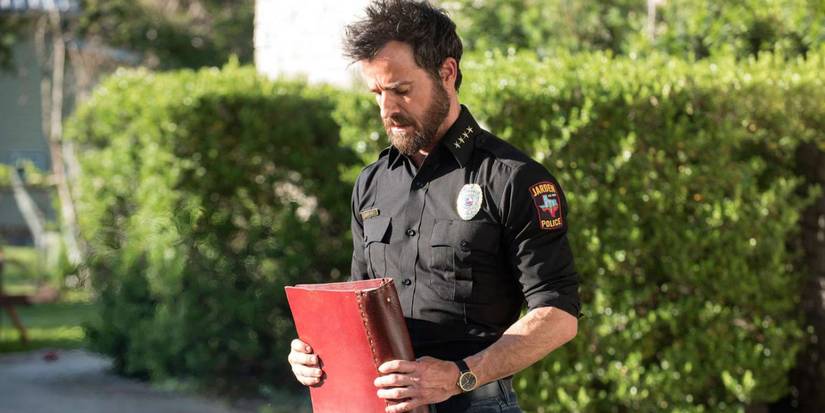
Few series use the passing of time as sharply as The Leftovers, with the criminally underrated HBO series opening three years after an enigmatic mystery in which 2% of the world’s population vanished without a trace. In the series premiere, audiences are introduced to a world of nihilism and anguish as Mapleton's chief of police, Kevin Garvey (Justin Theroux), strives to uphold a sense of normality and order even as his family life deteriorates around him. Season 2 pivots to Jarden, Texas, where not a single resident was taken in the “Sudden Departure,” but it is Season 3 that features the defining time jump.

Opening three years later, just short of seven years since the Sudden Departure, the third season masterfully bypasses overblown exposition and unnecessary plot developments simply by immersing viewers in the progression of the world. Switching between Jarden and Victoria, Australia, Season 3 excels as a mature analysis of grief and trauma, shifting away from the immediate, urgent chaos of Season 2’s setting to a sense of resigned acceptance that is beautifully enriched by smart writing and a litany of astonishing performances.

#5
N/A / 10 IMDb

In some respects, Better Call Saul doesn’t exhibit a time-jump as much as it is a series of flashbacks. After all, it opens on Jimmy McGill (Bob Odenkirk) living in Omaha under the alias of Gene Takavic in its very first episode. However, the bulk of the series follows McGill’s transformation into Saul Goodman, his corruption-fueled evolution from a street-savvy public defender to a prominent legal advisor to one of the biggest drug traffickers in North America, a narrative thread that reaches its zenith in the final moments of Season 6’s ninth episode, "Fun and Games."

It is therefore something of a jolt when the next episode leaps forward to the black-and-white 2010 setting, with Jimmy living as Gene Takavic approximately six months after the events of Breaking Bad’s finale, and years after audiences just saw him embrace his charismatic scumbag persona of Saul Goodman. While inevitable, the time jump is still used exceptionally well, eschewing years of tedious character development and rehashes as it sets Better Call Saul on its poignant final stretch, its climactic epilogue that concludes Jimmy’s arc magnificently and brings about the end of the extended Breaking Bad story world.

#6
N/A / 10 IMDb

Functioning as both an absorbing spy thriller and a beautifully crafted period piece, The Americans follows KGB sleeper agents Elizabeth (Keri Russell) and Phil Jennings (Matthew Rhys) as they carry out covert assignments while based in Washington, D.C. in the early-to-mid 1980s. Season 6 opens with a dramatic time leap; however, jumping forward three years from the end of Season 5 to 1987, effectively skipping from the height of the Cold War tensions to the final stages of the conflict.

In terms of the characters themselves, it springs forward to a point where Phil has left the KGB and is working full-time at the travel agency which served as their cover, Elizabeth is besieged by assignments as the situation in the USSR grows desperate, and their daughter Paige (Holly Taylor) is training to become a KGB agent herself. Brilliantly used, the narrative device avoids a stagnant patch of the story while employing a greater sense of tension, not only because the Jennings family is being divided and pushed to their limit, but because the looming end of the Cold War brings with it a sense of urgency and desperation. This air of heightened suspense and strained family dynamics remains palpable right up until the series finale.

#7
N/A / 10 IMDb

Admittedly, this entry may be cheating a bit as it does serve as the introduction to the show, but Cobra Kai technically begins by re-immersing fans in the dramatic victory of Daniel LaRusso (Ralph Macchio) in the iconic 1984 classic, The Karate Kid. The suspense, the spectacle, the unsportsmanlike mentorship of John Kreese (Martin Kove), and, of course, the crane kick closer that sees LaRusso stand triumphant over his adversary and schoolyard bully, Johnny Lawrence (William Zabka), all feature as the opening of the hit Netflix series.

A young Johnny lies face-down on the mat in momentary defeat, the camera draws nearer to his anguish, and then a 34-year match cut that reveals a hungover, middle-aged Lawrence lying in bed, indicating the defeat he suffered in ’84 may not have been quite so momentary after all. Cobra Kai excels as a fun-loving masterpiece of karate chaos and character redemption, and its pilot episode captures Johnny at his lowest point with tremendous efficiency and impact with its abrupt time jump that is rife with plenty of humor, but a touch of resonant pathos as well, grounding viewers in the effervescent tone of the series while showing that the years have not been kind to Cobra Kai’s former star.

#8
N/A / 10 IMDb

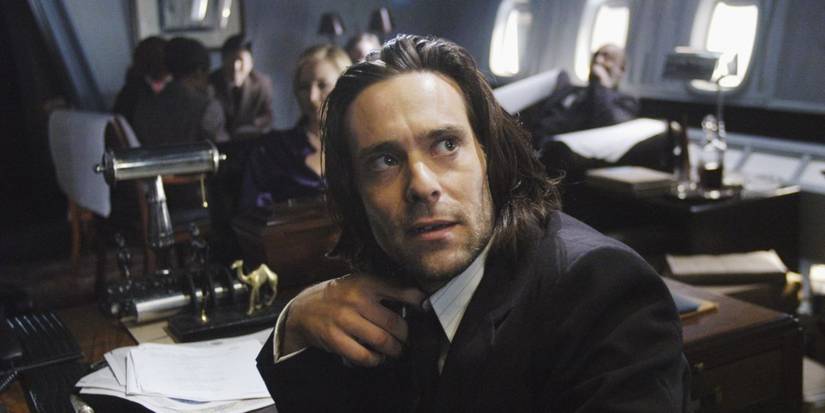
Most series that utilize a drastic time jump implement it between seasons or maybe even between episodes. Battlestar Galactica goes beyond that, propelling the story forward a year (380 days to be exact) in the middle of its Season 2 finale, “Lay Down Your Burdens (Part 2)”. As the hit sci-fi series follows the remnants of humanity as they search for Earth while evading the antagonistic Cylons, Season 2 finds a rich streak of drama in the lead-up to a presidential election, with the looming settlement on New Caprica a pivotal point, one that makes Dr. Gaius Baltar (James Gallis) a major candidate despite his obvious ineptitude.

When he wins, the series doesn’t waste time showing the slow descent into disorder and disaster, immediately skipping ahead a year to showcase the rabble that is his administration, with Battlestar ships not being maintained in combat-ready condition and Capricorn One being reduced to a self-congratulatory bachelor pad that Baltar indulges in while ignoring the issues his people face. None of it is a surprising byproduct of Baltar’s presidency, but the series still showed tremendous ambition to skip straight to the result of his reign. It keeps Battlestar Galactica’s storytelling instincts sharp and propulsive while immersing viewers in a vast array of new challenges the characters have to face if they are to survive.

#9
N/A / 10 IMDb

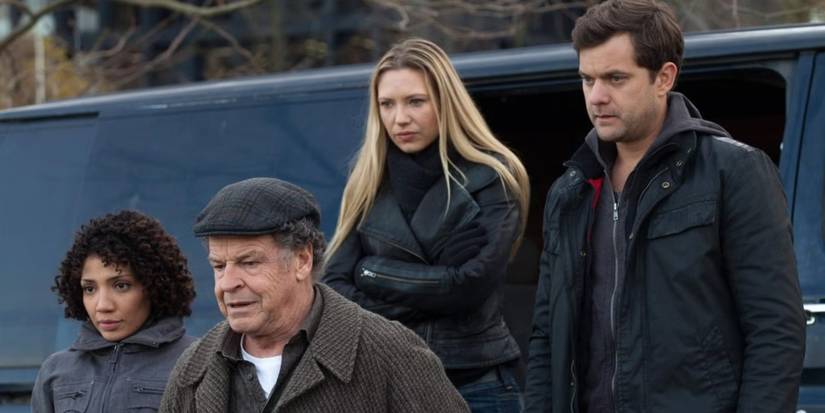
An enticing marriage of police procedural drama and high-concept sci-fi, Fringe is something of a hidden gem of 21st-century sci-fi television. Its bold and engrossing premise follows the Fringe Division of the FBI, a small team of federal agents and extravagant scientists who specialize in cases linked to fringe science, ranging from transhumanist experiments gone rogue to the possible collision of two parallel universes. The final episode of Season 4 takes a drastic leap from the contemporary setting of 2010 to a dystopian 2036, where the Observers take over and have been in charge for 20 years.

Described as a back-door pilot for the fifth and final season, the audacious time jump and complete reconfiguration of the series’ setting created a new, whole new story for the characters to explore with a litany of unique and unexpected obstacles to overcome. With much of Season 5 following the Fringe Division as they set their minds to reversing this bleak future, Fringe’s time-jump thrives not only as an absorbing plot device, but as an inspired masterstroke of sci-fi storytelling. It set the groundwork for what was a spectacular final season that diverted away from the case-of-the-week formula in favor of a serialized arc of futuristic war and the saving of humanity.

#10
N/A / 10 IMDb

One of the defining sitcoms of the 2010s, Parks and Recreation endeared itself to viewers the world over as it followed mid-level bureaucrat Leslie Knope (Amy Poehler) and her wonderfully eccentric team working in the Parks and Recreation Department of Pawnee, Indiana. Armed with tight storytelling and an abundance of charm, the series’ focus on the obstacles the team overcame, the relationships they built, and the many misadventures they embarked on was always a treat to watch, but the opening of Season 7 executed a time jump that few expected.

Leaping ahead three years, “2017” brilliantly skips slow-paced storylines and resets key character dynamics, allowing the final season to immerse fans in different career challenges for Leslie as well as new interpersonal relationship dynamics, with the mysterious feud between her and Ron Swanson (Nick Offerman) being a highlight. The bold move towards the ending of the story was amplified by a series of time jumps in the series finale, bringing a rewarding climax to the fun-loving story and offering closure as it depicts how the lives of the main characters panned out up to 2048.